VDOT Phase 3 Report Shows Rail-To-Trail is the Responsible Path Forward
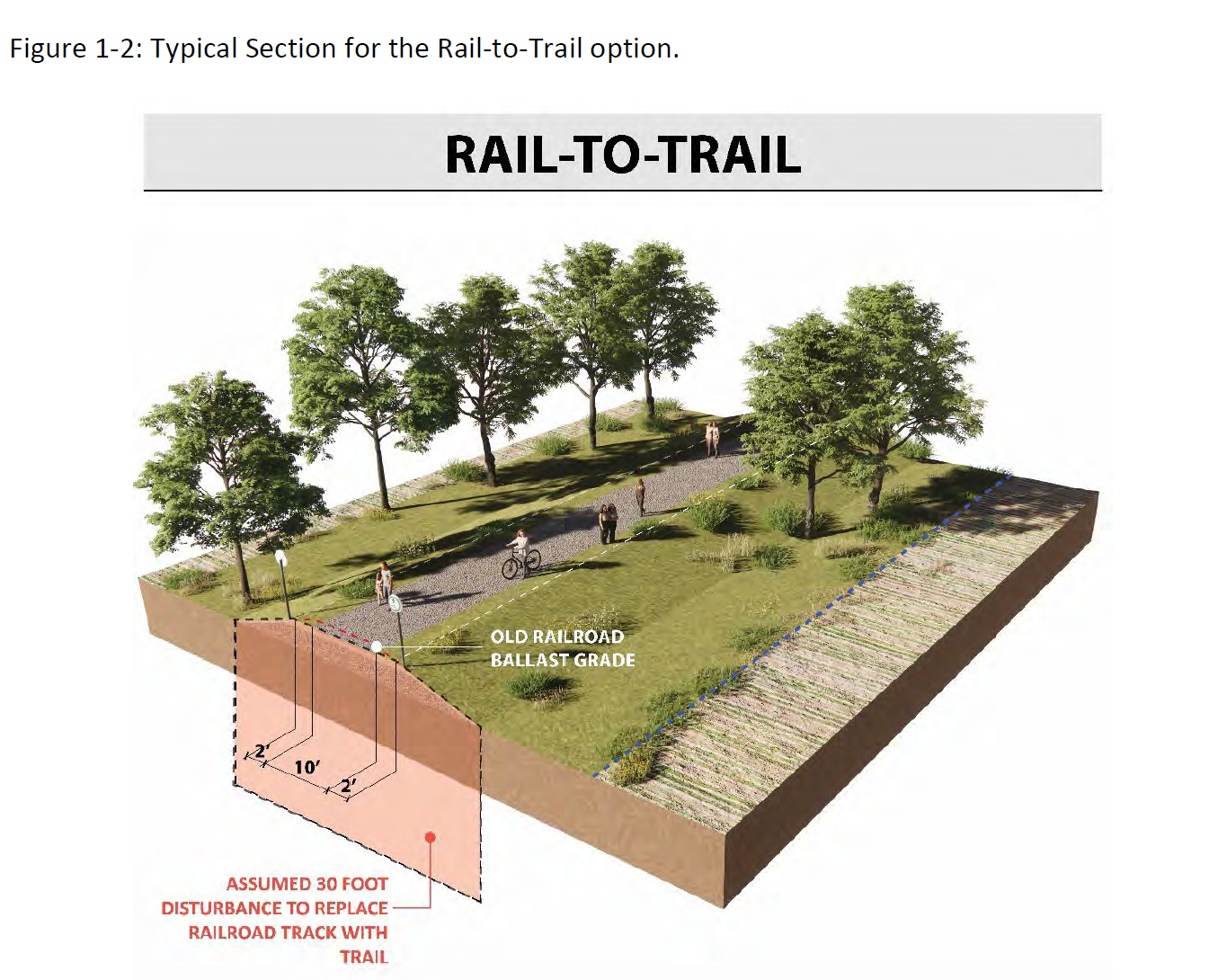
Rail-with-trail would be costly and complicated. This is the finding in Phase 3 of VDOT’s Rail-With-Trail Assessment, confirming that restoring rail as part of the Shenandoah Rail Trail project would be prohibitively expensive and require extraordinary engineering and construction.
VDOT’s assessment clears the way for progress on the rail-to-trail opportunity supported by Valley communities to responsibly preserve the corridor while delivering quality-of-life and economic benefits to the region.
What VDOT’s final rail-with-trail assessment shows
‼️ Restoring the rail line would quadruple the cost. VDOT’s Phase 3 cost analysis indicates that incorporating rail restoration into the existing trail proposal would cost $697 million, four times more than a trail-only project.
‼️ Engineering would be extreme and risky. Earlier assessment phases revealed that one-third of the corridor would require full reconstruction to return to service as a rail line. For the corridor’s bridges, the report found that cantilevering the trail out from many of the existing spans would be risky, so 16 new bridges would be required. And implementing rail-with-trail would require extensive new construction for culvert extension and new stormwater facilities. Those factors dramatically drive up costs and complications.
‼️ Private land impacts would be unavoidable in a rail-with-trail project. VDOT found that adding a rail to the project would likely require temporary and permanent easements beyond the railroad right-of-way for walls, drainage, and bridge/culvert work, resulting in additional disruption to adjacent property owners.
And so far, no operator has committed to service, and the economic viability of rail remains unaddressed—underscoring that there’s no business case on the table for trains.
We know that rail-to-trail is feasible
At $187 million, a stand-alone trail would be less than a quarter of the cost of including rail restoration in the project, according to VDOT’s current estimate.
Indeed, a 2021 study conducted by VDOT and the Department of Conservation and Recreation found that converting the 49-mile corridor to a dedicated trail IS feasible and also that there is overwhelming support for the concept.
Here are some of the study’s high points:
-
A community survey conducted as part of the study found that 94% of respondents would use the trail if built. Respondents indicated they would walk, bike and run on the trail for recreation, exercise and for social or family outings.
-
The nine towns and three counties along the route are primed and ready to transform the un-used rail corridor. Not only have they passed formal resolutions of support, many localities have also started planning for town-to-trail connections and access points.
-
Many local and regional area plans have identified the lack of safe and accessible outdoor recreation and transportation options and endorsed the concept of developing expanded bike and pedestrian facilities throughout the region.
-
A Shenandoah Rail Trail would neighbor many vulnerable populations and stand to increase the quality of life for residents, bringing both physical and mental health benefits.
-
With limited public transportation options and many households in the region without access to a car, a Shenandoah Rail Trail will provide a safe alternative transportation option both within and between towns and connect to existing public transportation networks.
-
The multi-use trail will be separated from cars and other traffic and developed at a gentle grade so it can be enjoyed by folks of all ages and physical abilities.
-
Several of the trailhead locations proposed in the study already exist in and around town parks. The corridor also passes through many of our local historic and cultural resources as well as by a number of destination museums, eateries and lodging.
-
The existing rail right-of-way is wide enough to fit a 10′ wide path and most of the road crossings are located in areas that have low vehicle speed and lower traffic volume. Most existing road crossings have adequate sightlines, but of course, the study still recommends safety signage and crosswalks.
-
Although the existing bridges require repair, particularly the bridge decking, they do have good structural capacity.
What does all of this mean?
VDOT’s rail-with-trail assessment confirms what earlier phases and thousands of public comments already showed: rail-with-trail is costly and complicated, while rail-to-trail is the practical, community-backed path. This conclusion aligns with formal endorsements from every locality along the corridor and years of on-the-ground engagement.
So, if we want to:
✅ Preserve the potential for rail for future generations…
✅ Enhance the quality of life for our residents…
✅ Deliver a positive economic impact…
…the only responsible, achievable, and cost-effective way to do all of this is rail-to-trail. VDOT’s assessment clears the way to move forward now with the stand-alone trail that the corridor’s communities have supported for years.
What’s next?
Communities will have additional opportunities to weigh in. VDOT is planning a third round of public engagement in December 2025, with a series of in-person meetings and an online survey.
With the assessment complete, Valley leaders and the Commonwealth can act on the consensus choice: purchase the corridor and build the Shenandoah Rail Trail.